ABA Techshow
How trial lawyers can utilize tech to give them an edge in the courtroom
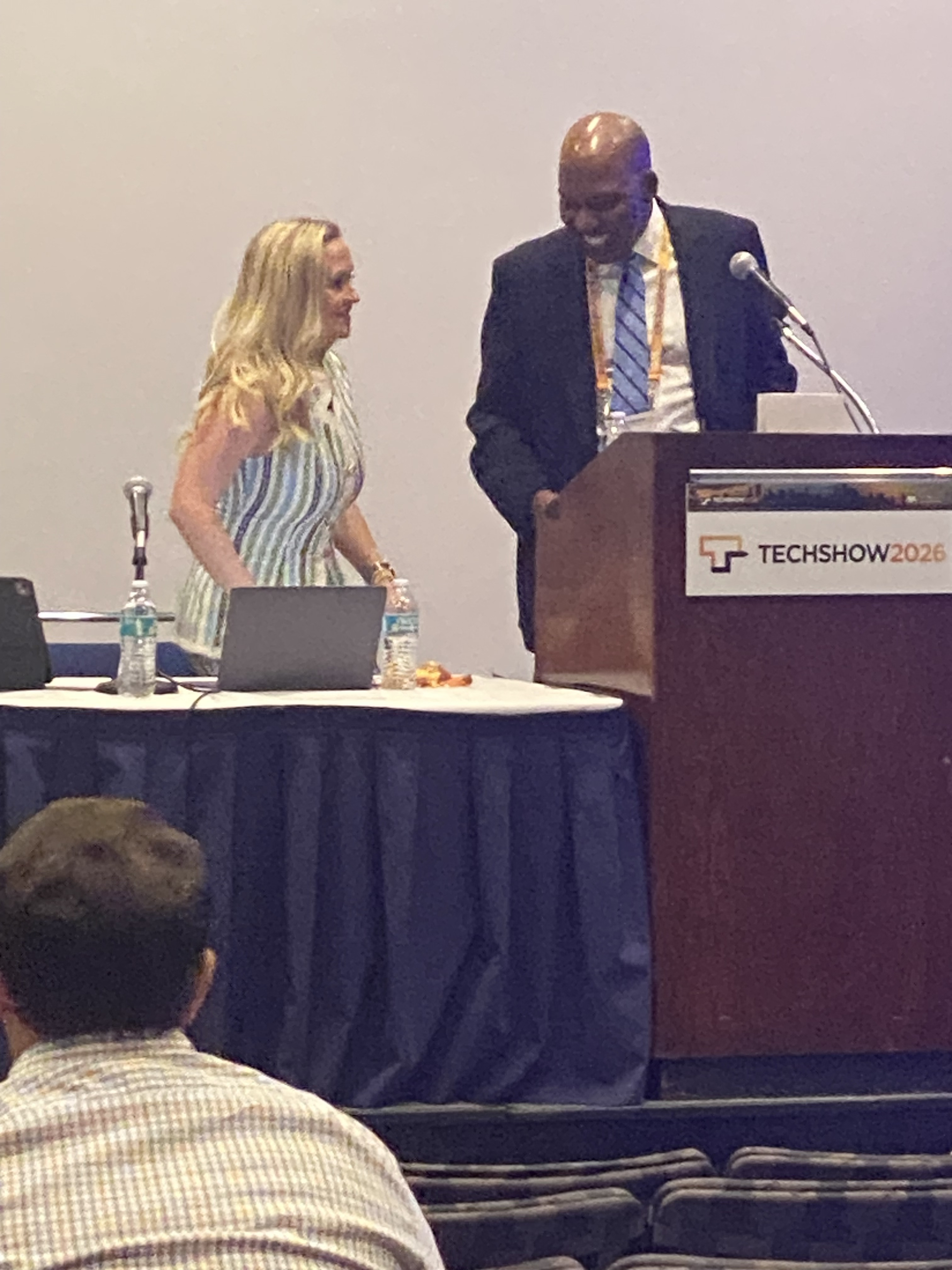
Jillian Jordan Evans (left) and Jimmy B. Wilkins (right) speak about using technology during trials at ABA Techshow. (Image by Shirley Henderson)
“In today’s courtroom, being tech savvy is not optional. It’s strategic,” panelist Jillian Jordan Evans noted during a panel discussion at ABA Techshow on Thursday afternoon.
Evans is director of Law Practice Management and an adjunct professor based in Montgomery. She and co-panelist Jimmy B. Wilkins, an attorney at Watkins & Eager in Jackson, Mississippi, offered conference attendees their approach to winning over today’s modern jury, which is often influenced by the media-saturated landscape around them.
According to Evans, 65% of people learn from visual aids.
“Concise visual presentations reduce cognitive load, allowing jurors to focus on key themes and evidence rather than decoding dense language,” according to her presentation. One tool, TrialPad, was highlighted to show side-by-side comparison of documents, visual arguments and comparing images simultaneously.
Other tools included Filevine, which helps users automate workflows, and OnCue and ExhibitView Solutions, which assist with trial presentations.
Wilkins said he has bought every large language model tool available and demonstrated how he uses them to compare the finding of two experts in a case.
“When you get to the point in your trial when you want to compare what one side did versus what the other side did, I would see if I could put those into the paid version of ChatGPT and the paid version of Claude, and see if it can create a nice little compare and contrast chart” Wilkins said. “I’ve done that on a few cases, and it’s actually worked really well.”
Follow along with the ABA Journal’s coverage of the ABA Techshow 2026 here.
Evans, during her PowerPoint presentation, discussed technology tools to consider during voir dire and to evaluate jurors and the ethical boundaries in using digital research, which often includes social media platforms Facebook, X and LinkedIn.
For public records searches, the attorneys suggested Thomson Reuters Clear and TransUnion TLOxp for investigative searches and locating hard-to-find people. The presentation also mentioned the American Bar Association Formal Opinion 466, which states: “Unless limited by law or court order, a lawyer may review a juror’s or potential juror’s Internet presence, which may include postings by the juror or potential juror in advance of and during a trial, but a lawyer may not communicate directly or through another with a juror or potential juror.”
Wilkins tells the audience to not overthink artificial intelligence too much. In fact, he suggests treating the technology like software, “to see what it can do for you.”
Write a letter to the editor, share a story tip or update, or report an error.