U.S. Supreme Court
The U.S. Supreme Court on Wednesday heard oral arguments in one of the most high-profile cases of the term, Trump v. Barbara, a challenge to President Donald Trump’s executive order limiting birthright citizenship. The executive order, issued Jan. 20, 2025, provides that only those born to citizens or green card holders are United States citizens. As the solicitor general says in the petitoners’ brief: “In short, the order does not recognize children of illegal aliens or temporarily present aliens as citizens by birth.”
In other words, a baby is not a citizen if born to an undocumented immigrant or to a person in the United States on a visa.
(A word about language. The solicitor general’s brief and amicus briefs supporting it repeatedly uses the words “illegal aliens” and “aliens,” terms that many find offensive. The American Civil Liberties Union’s brief and the amicus briefs supporting it do not use these terms and refer to noncitizens and immigrants.)
Every federal court to rule on the issue has declared this unconstitutional. What are and what aren’t the issues before the Supreme Court?
What is not in dispute?
There seems to be little dispute that when the United States began, it followed English law that all born in the country were citizens of the country. The Supreme Court described this history in United States v. Wong Kim Ark (1898): “By the law of England for the last three centuries, beginning before the settlement of this country and continuing to the present day, … every child born in England of alien parents was a natural-born subject, unless the child of an ambassador or other diplomatic agent of a foreign state, or of an alien enemy in hostile occupation of the place where the child was born. The same rule was in force in all the English colonies upon this continent down to the time of the Declaration of Independence, and in the United States afterwards.”
Nor is there dispute that the first sentence of the 14th Amendment, which is the focus of the case, was adopted to overrule the Supreme Court’s tragic decision in Dred Scott v. Sandford (1857), which held that enslaved individuals were property of their owners and were not United States citizens, even if they had been born in the United States. Section 1 of the 14th Amendment, ratified in 1868 after the Civil War, says: “All persons born or naturalized in the United States, and subject to the jurisdiction thereof, are citizens of the United States and of the state wherein they reside.”
What is in dispute?
First and most important, the disagreement is over the meaning of the phrase “subject to the jurisdiction thereof” within the 14th Amendment. The solicitor general in its brief argues that the “clause extends citizenship only to those who are ‘completely subject’ to the United States’ ‘political jurisdiction’—in other words, to people who owe ‘direct and immediate allegiance’ to the nation and may claim its protection.” He argues that this includes only children born to citizens, to freed enslaved individuals and to children of noncitizens who “have a permanent domicile and residence in the United States.” But children born to those who are not lawfully present or are in the country on visas are not citizens because “such children do not owe primary allegiance to the United States by virtue of domicile, for illegal aliens lack the legal capacity to establish domicile here.”
The ACLU and its amici strongly disagree. They contend the phrase “subject to the jurisdiction thereof” was meant to exclude from automatic citizenship only the children born to foreign diplomats or hostile invaders, who are not subject to United States legal authority due to their diplomatic and combatant immunity. Children born in the United States are subject to its jurisdiction in every way. The ACLU quotes Sen. Jacob Howard, a Republican from Michigan who in 1866 introduced the language into Congress and said it “is simply declaratory of what I regard as the law of the land already, that every person born within the limits of the United States, and subject to their jurisdiction, is by virtue of natural law and national law a citizen of the United States.”
Second, the parties disagree as to the meaning of the Supreme Court’s decision in United States v. Wong Kim Ark. Wong Kim Ark was born in 1873 to Chinese parents who were not citizens. After visiting China, he was denied reentry to the United States with the government contending that he was not a citizen. In a 6-2 decision, the Supreme Court ruled in his favor and held he was a United States citizen because he was born in this country.
The solicitor general argues that Wong Kim Ark involved a child of noncitizens “with a lawful ‘permanent domicile and residence’ here.” The government thus contends: “Wong Kim Ark recognized that the clause guarantees citizenship not just to children of citizens, but also to children of aliens ‘enjoying a permanent domicile and residence’ here. That limit was central to the analysis; references to domicile appear more than 20 times in the opinion. And the opinion affirmatively suggests that the clause does not cover children of aliens who are not permitted by the United States to reside here.”
The ACLU maintains that Wong Kim Ark resolves this case. In that case, the court reviewed the history of citizenship and concluded that those born in the United States are subject to its jurisdiction and are citizens of the United States regardless of the immigration status of their parents. The court said that the language of the 14th Amendment was meant to exclude “children of foreign sovereigns or their ministers, or born on foreign public ships, or of enemies within and during a hostile occupation of part of our territory.” The ACLU strongly disagrees with the government’s contention that “within the jurisdiction” is about the domicile of the parents. It writes: “There is no basis for the government’s proposed parental domicile rule. The English common law concededly forecloses it. American law rejected it. The text of the clause rebuts it. And the framers’ design cannot be squared with it.”
Third, the parties disagree as to the importance of the federal immigration statute, initially adopted in 1940 and reenacted in 1952, which copies the language of the first sentence of the 14th Amendment.
The solicitor general’s brief spends little time on the statute, contending that its language should be interpreted in the same way as Section 1 of the 14th Amendment. By contrast, the ACLU argues that Congress adopted this law at a time when the 14th Amendment was understood to confer citizenship on all born in the United States and was meant to codify that in a statute. It contends that “the prevailing understanding of those words in 1940 and 1952 forecloses [the government’s] parental domicile theory.”
Fourth, there is the question of whether the president can change by an executive order who is deemed a citizen. The 14th Amendment and federal law long have been understood as bestowing citizenship on all born in the United States regardless of the immigration status of their parents. No one disputes that the Trump executive order is a dramatic change in the law. Is this something a president can do?
Interestingly, this is not a focus of the briefs, though it is an important underlying issue in the litigation. If President Trump can change who qualifies for citizenship, could a future Democratic president undo this and bestow citizenship on all who were born in the United States?
Finally, the parties disagree over the consequences of allowing birthright citizenship. The government presents many harms to permitting it. The solicitor general argues that it encourages illegal immigration; it raises national security concerns because some enter the country for hostile activities; it encourages birth tourism of people coming to the country just to give birth and give their children citizenship; and it “degrades the meaning and value of American citizenship.”
By contrast, the ACLU stresses the human consequences of changing the long-standing law as to birthright citizenship. It is important as a symbol of his anti-immigrant platform, but also one that if allowed to stand would have profound effects. The executive order would deny citizenship to approximately 250,000 children born in the United States each year. It would leave most of these babies without citizenship in any country. Moreover, as the ACLU says in its brief, the Supreme Court’s accepting the Trump administration argument “would cast a shadow over the citizenship of millions upon millions of Americans, going back generations.”
Conclusion
At least since 1898, when United States v. Wong Kim Ark was decided, until Jan. 20, 2025, it always was understood that everyone born in the United States is a citizen. President Trump, as part of his aggressive anti-immigration agenda, has tried to change this. The Roberts Court often, but not always, has sided with President Trump. Most notably, it ruled against his power to impose tariffs. How the court rules on his power to restrict birthright citizenship is one of the most important cases of the term and vitally important for so many people’s lives.
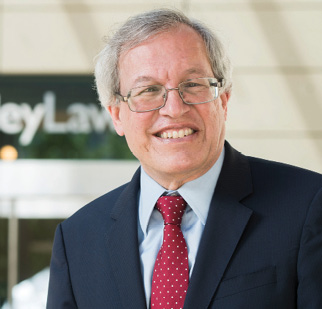
Erwin Chemerinsky is dean of the University of California at Berkeley School of Law. He is an expert in constitutional law. He’s also the author of many books, including his most recent ones: Campus Speech and Academic Freedom: A Guide for Difficult Times and The Supreme Court October Term 2024: Taking Sides.