By Stephen W. Mooney
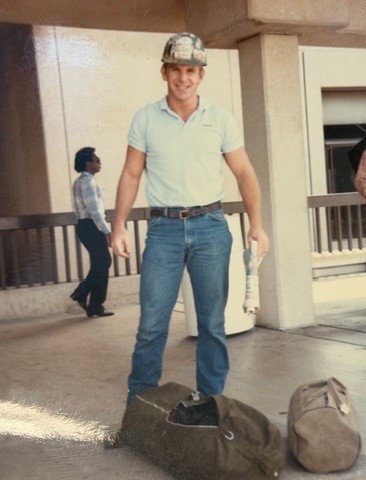
Before I ever stood in front of a jury, I stood on the turf at Georgia Tech as a college football player. I’ve also dug graves, worked on offshore oil rigs and branded cattle as a ranch hand. At first glance, none of these roles seem to have much in common with the world of high-stakes trial law that I’ve occupied for nearly 40 years. Yet each one instilled lessons and forged qualities that have been invaluable in the courtroom.
Georgia Tech football: Discipline, grit, and strategy
Playing football at a Division I school like Georgia Tech was more than a physical challenge—it was a mental and emotional crucible. You learn quickly how to function under immense pressure, stick to a plan and adjust on the fly when that plan falls apart. Just like in a trial, you train hard, study harder and when game day—or court day—arrives, you have to execute with confidence. The game plan playbook equals a trial notebook. Football also taught me to treat my opponent with respect. Win or lose, you shake hands with your adversary when the game/trial is over. Opponents don’t forget how you act, and you never know when you will see them again.
The discipline, time management and relentless work ethic I developed on the field are the same traits I rely on to prepare for and perform in court. Being part of a team also taught me how to lead and when to lean on others—a vital balance when working with fellow lawyers, paralegals, consultants and co-counsel on complex litigation.
Grave Digger: Humility and perspective; someone has to do it
Digging graves is physically demanding and emotionally demanding, and it’s often solitary work. I did this job when I was 18 years old and a senior in high school. It teaches you about the weight of responsibility—literally and figuratively. Every task must be done with care and respect, because what you’re handling isn’t just earth; it’s someone’s final resting place.
That experience grounded me in humility and gave me a profound sense of empathy. As a trial attorney, especially in cases involving serious injuries or wrongful death, being able to connect with clients and jurors on a human level is critical. Even today, I handle a lot of litigation in the cemetery industry.
Working in a graveyard taught me that every life has value and every story matters—principles I carry into every case that I try.
Ranch Hand: Responsibility and adaptability
Right after I graduated from college, I worked as a ranch hand. Ranch life is unpredictable. The days are long. They can be miserably hot or bitterly cold. The weather doesn’t stop anything. Rattlesnakes are scary. One day you’re mending fences; the next, you’re helping deliver a calf in the middle of the night. There’s no room for ego—just the task in front of you and the knowledge that someone is counting on you to get it done.
That adaptability serves me well in litigation, where no two cases are alike and no day unfolds exactly as planned. The hands-on nature of ranch work also taught me to be pragmatic, resourceful and fiercely accountable. In the courtroom, that means being prepared for every scenario, staying steady under crossfire, and owning every argument that I make.
Oil Rig Worker: Toughness and focus under pressure
I worked on three different oil rigs in the Gulf of Mexico, including during the summer after my first year as a law student. Working on an oil rig demands endurance, attention to detail, and an ability to stay calm in high-stress, hazardous environments. You depend on the person next to you. Mistakes can cost lives. You learn to trust your training, stay alert and work through fatigue without losing focus.
Those same skills translate directly to trial work. Trials are marathons, not sprints. Long days, mental exhaustion and high stakes are the norm. But like on the rig, you keep your head down, stick to your process and do the job right—because someone’s future may depend on it.
A trial attorney forged by experience
When jurors look at me, they may not know I’ve lived a dozen lives before this one. But I believe that they can sense something real. I’ve worked hard jobs, stood in tough places, and I understand what it means to fight for something that matters. That authenticity helps me build trust with juries, clients and colleagues alike.
My path to the courtroom wasn’t conventional. But every stop along the way—whether on a football field, a ranch, an oil rig or in a cemetery—taught me something about hard work, human nature and how to stand tall under pressure. And those are the very traits that make me the trial attorney I am today.

Stephen W. Mooney
Stephen W. Mooney is a partner at Weinberg, Wheeler, Hudgins, Gunn & Dial. He’s served as lead counsel on more than 300 lawsuits and has tried cases to verdict in Georgia, Florida, Mississippi, Nevada, North Carolina, Ohio and Tennessee.
#MyPathToLaw is a guest column that celebrates the diversity of the legal profession through attorneys’ first-person stories detailing their unique and inspiring trajectories.
This column reflects the opinions of the author and not necessarily the views of the ABA Journal—or the American Bar Association.