Roses Talk: Elevating At-Promise Student Voices in San José Unified is a Stanford Center for Racial Justice Law and Policy Lab (LAW 809X/EDUC 309X) co-led by Dr. Subini Annamma and Hoang Pham that seeks to directly address persistent disparities in education by centering “at-promise” student voices in education policy and practice. In the course, Stanford students conduct interviews and focus groups with the most marginalized students at Gunderson High School, a Title I school in San José Unified School District (SJUSD). Using this data, students develop policy recommendations that inform school and district decision making, particularly on how to engage and improve outcomes for at-promise students across the district. As part of their coursework, students author a series of independent blog posts that offer insight into their experiences. These reflections not only document their learning but also contribute to an ongoing dialogue about education in the U.S., particularly by amplifying the voices of the young people they work with.
Since beginning this project in January, our research team has remained dedicated to its core mission: amplifying the voices of at-promise students to drive meaningful systems change. In April, as we transitioned from qualitative data analysis to policy development, we identified key policy values—foundational principles that grounded our policy ideas in the project’s core mission and shaped the final report. While drafting our findings and recommendations, I learned to navigate the delicate balance between faithfully representing student voices and incorporating feedback from all stakeholders. This skill was deeply influenced by one of our inspiring spring quarter guest speakers, Rigel Massaro, Deputy Legal Counsel and Deputy Policy Director for the California State Board of Education.
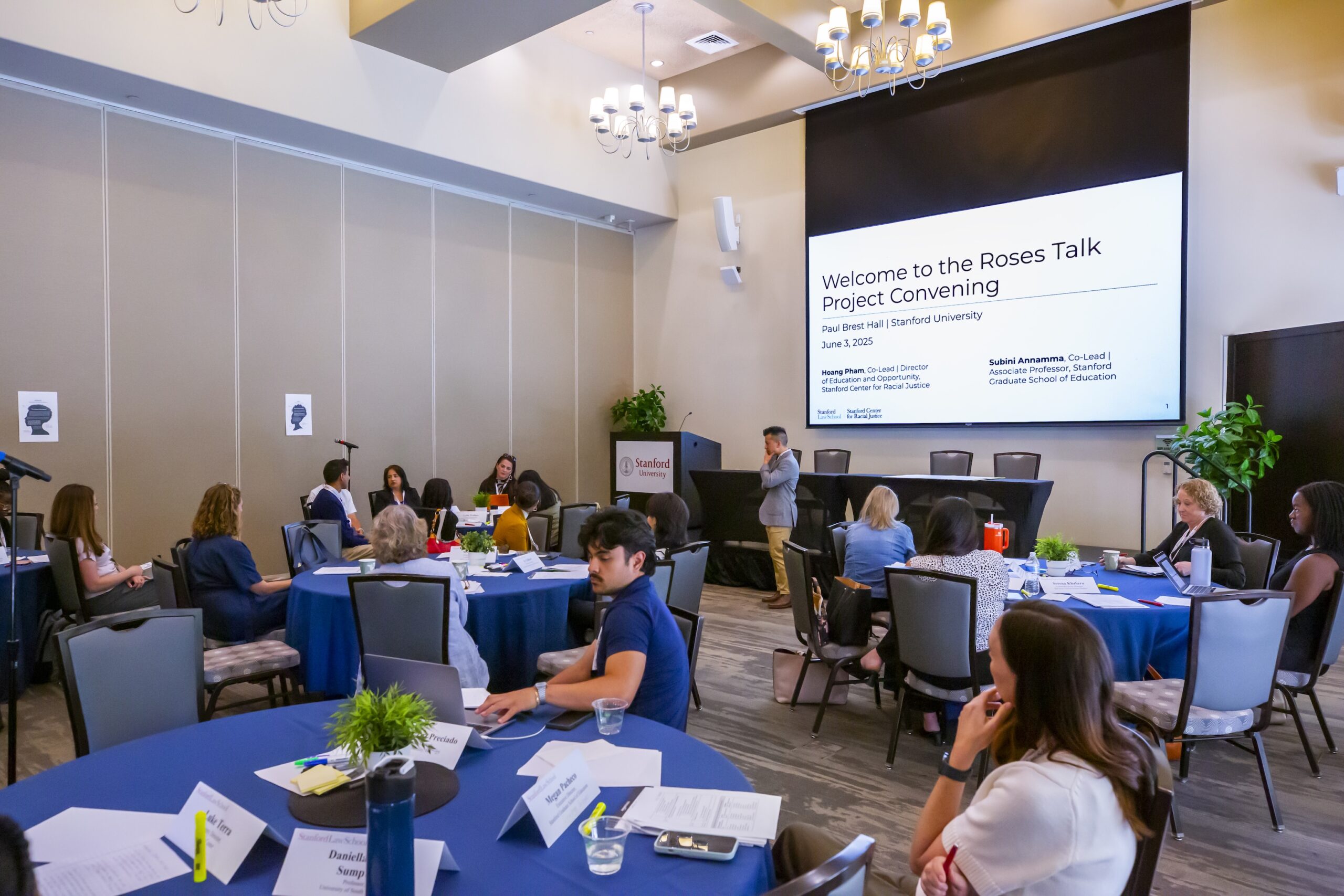
These lessons and experiences all came to a head in our final stretch of work—preparing for the Roses Talk Project Convening—the culminating event of our research journey. The convening brought together stakeholders from across the education sector for a day of reflection, dialogue, and collaboration. The final three weeks leading up to the convening were demanding, as we pushed ourselves beyond what seemed possible to prepare for the final event. Our team undertook multiple tasks: drafting, revising, and copy-editing a 56-page project report; developing and rehearsing presentations of our findings and recommendations; and coordinating the event agenda. We accomplished this momentous feat because of our shared commitment to elevating the voices of the exceptional at-promise students who entrusted us with their stories, and because of the strong community of care we built together.
On behalf of all eight practicum students, we extend our deep gratitude to Hoang Pham and Dr. Subini Annamma for their adaptive and empowering leadership throughout this project. Their guidance fostered a research environment grounded in trust, collaboration, open communication, mutual support, flexibility, and grace. This caring foundation taught me that practicing reciprocity—a core principle of humanizing, community-engaged educational research—extends not only to researcher-participant relationships, but also to relationships within research teams. This intentional scaffolding of student support enabled us to produce robust and meaningful work together, fostering confidence through solidarity—an especially encouraging experience during our final class meeting.
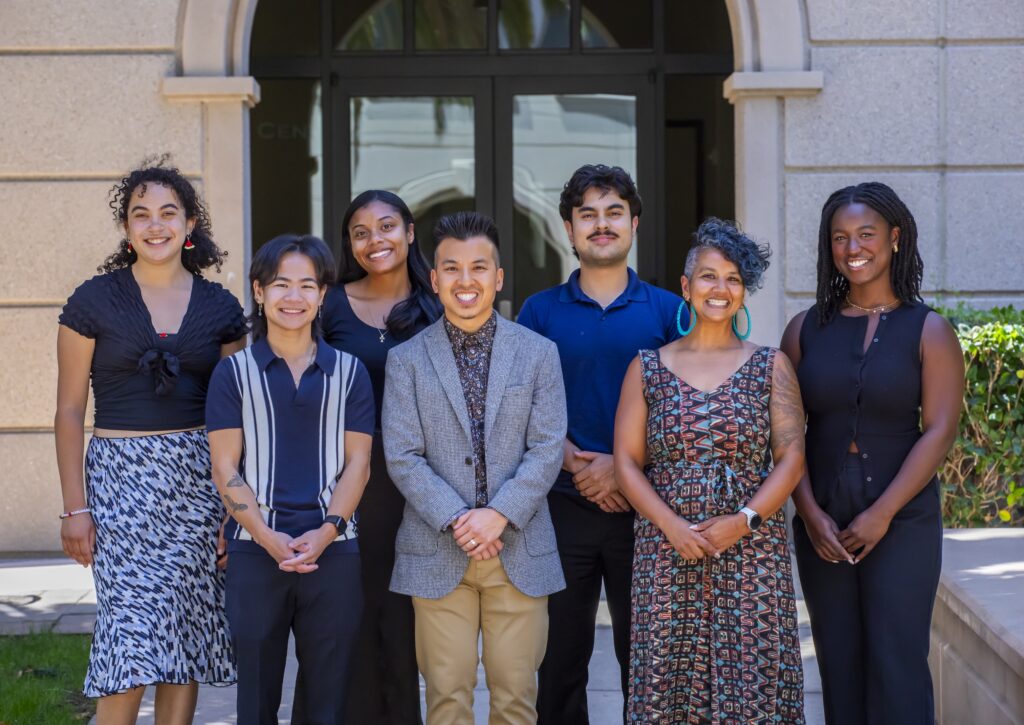
Many of us arrived on Monday, June 2, feeling both exhausted and hopeful. A shared whisper of anxiety hung in the air as the culminating event—representing the work we had poured into the past 147 days—loomed just a day away. Personally, my nerves stemmed from pre-event apprehension: I carried an internal responsibility to do justice for our students by performing my role in the convening as perfectly as possible. A successfully executed event would help maximize the project’s impact on improving the educational experiences of at-promise youth in SJUSD and at Gunderson High School.
As a young education researcher, I’m most familiar and comfortable working behind the scenes, collecting and analyzing data. The prospect of formally presenting findings and recommendations to a room full of powerful, seasoned, and talented community leaders felt both exciting and intimidating, especially since most of our community engagement up to that point had been student-facing. Sensing this shared apprehension, Dr. Annamma and Hoang reminded us of our own expertise and positionality: as experts in the data, our main responsibility at the convening was to center the voices of the young people who shared their stories and ideas with us, just as we had from the beginning. They reframed the purpose of the convening as an opportunity for policy development rather than a high-stakes final event—that is, receiving stakeholder feedback on our research was just another step in the iterative policymaking process.
That evening, I revisited our Week 1 readings about the “roses” metaphor in the project’s title. Originally coined by Tupac Shakur (1989), the phrase “the rose that grew from concrete” symbolizes the marginalized young people who display extraordinary determination to overcome their challenging environments.
“Did you hear about the rose that grew
from a crack in the concrete?
Proving nature’s laws wrong it
learned to walk without having feet.
Funny it seems, but by keeping its dreams,
it learned to breathe fresh air.
Long live the rose that grew from concrete
when no one else ever cared.”
In light of our in-class discussion, I found comfort in this metaphor as a symbol of critical hope—the acknowledgement of persisting injustice and challenges in the education system while standing firm in the possibility for change. That night, I went to bed feeling proud of our progress, confident in our shared commitment to supporting at-promise students and one another, and excited to gather with the community for a day of thought-provoking conversations and celebration.
June 3: Dreaming Together for Growth to Take Root
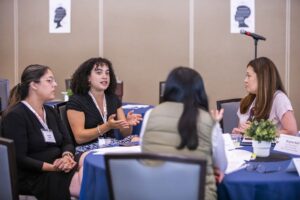
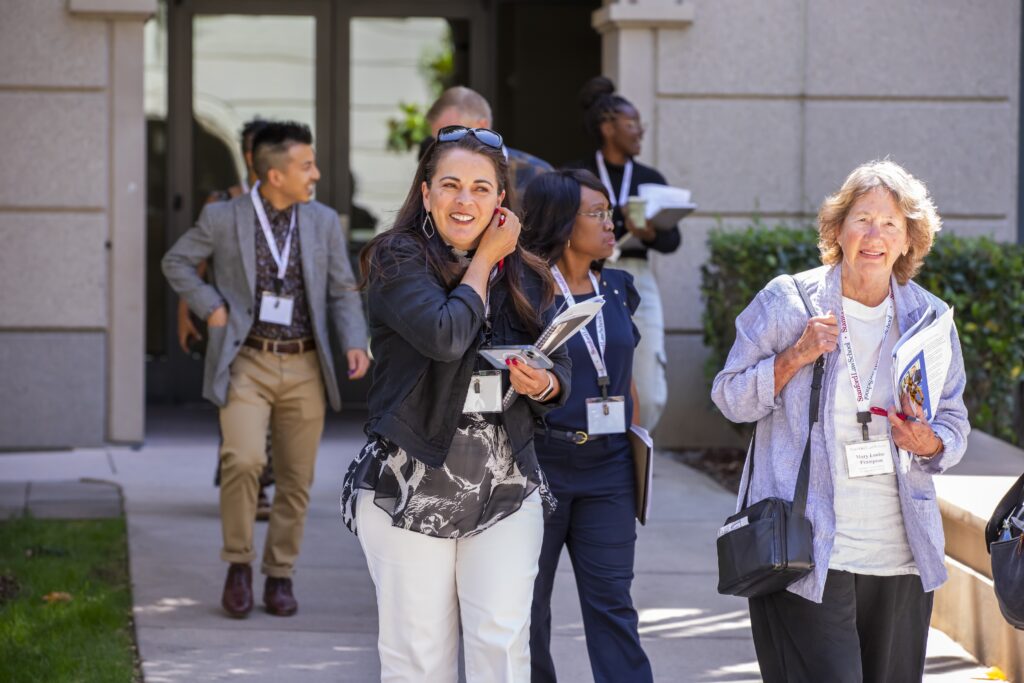
Ultimately, the project convening on Tuesday, June 3, was a monumental success. The vibrant atmosphere buzzed with social electricity as the 39 invited interdisciplinary education stakeholders—SJUSD and Gunderson leadership, Stanford faculty and staff, the Roses Talk research team, and community partners—arrived and mingled in Paul Brest Hall. Six poster silhouettes depicting our composite character counterstories adorned the walls, each highlighting excerpts that represented main themes identified by at-promise students: post-secondary support, teaching and learning, discipline, relationships, facilities, and athletics. Professional photographers and videographers darted about, documenting footage of the momentous occasion. A shared sense of promise and purpose permeated the room—the community had convened, and everyone was ready to get started.
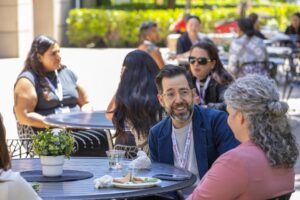
The day was framed through the lens of “opportunity infrastructure”—defined as a system of resources, supports, and practices within and across classrooms, schools, and the district that creates equitable opportunities for educational growth and upward mobility. Building reciprocal relationships to invest in opportunity infrastructure was a central focus throughout the event, recognizing that the burden for change should not rest solely on SJUSD or Gunderson but instead shared among various stakeholders, including those in higher education. The convening agenda guided this theme in five key ways:
- designated food and networking windows during breakfast, lunch, and the reception;
- planned time for full-group introductions in both the morning and afternoon that captured fluctuating attendance;
- an interactive report review and exploration session that emphasized the community engagement aspect of the research project;
- four dynamic presentations of findings and recommendations—post-secondary support, teaching and learning, discipline, and relationships—that sourced critical feedback for revising the project report; and
- an implementation path mapping activity in breakout groups that highlighted attendees’ individual expertise and fostered collective problem-solving.
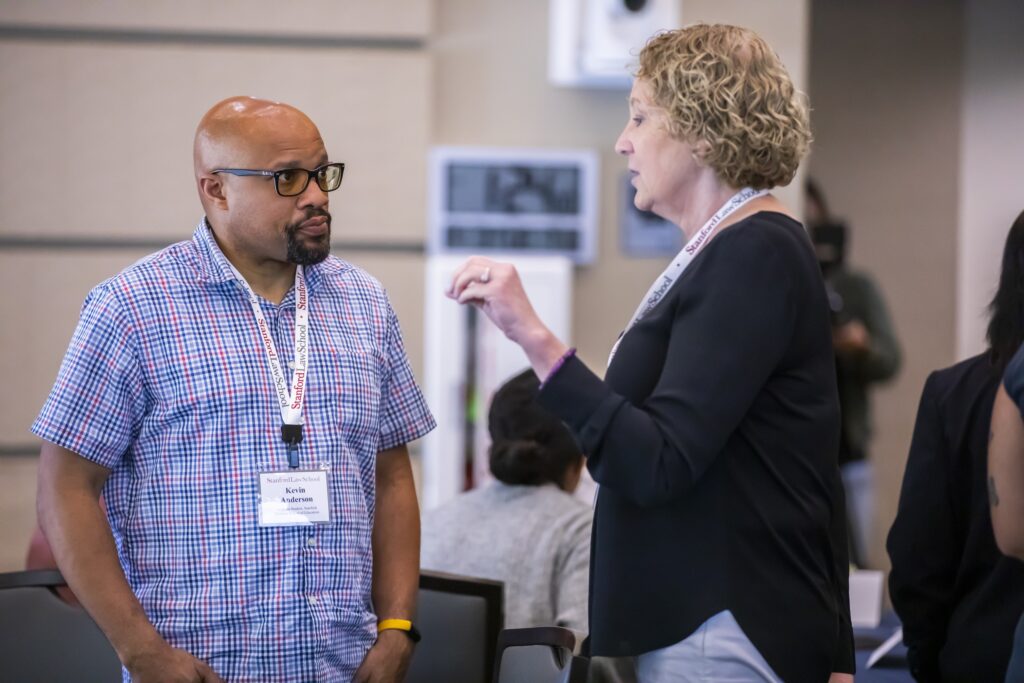
Throughout the day, attendees shared personal experiences and professional knowledge, offered constructive feedback, challenged each other to think more critically, collaborated in solidarity, and posed difficult questions to help shape the final report. Across multiple discussions, a recurring question emerged: How do we build a school culture of mutual trust and accountability?
Throughout the day, attendees shared personal experiences and professional knowledge, offered constructive feedback, challenged each other to think more critically, collaborated in solidarity, and posed difficult questions to help shape the final report.
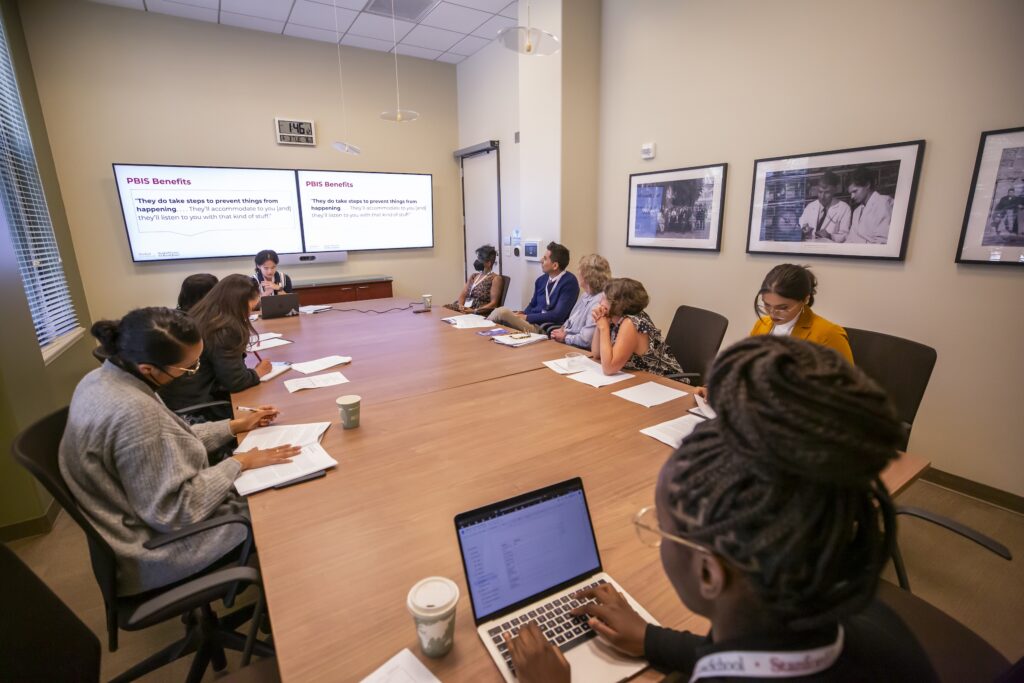
In my discipline presentation breakout group, Dr. Annamma emphasized a core distinction between restorative culture and restorative practices—fostering a restorative culture must come first, because without this foundation, there is nothing left to restore. Mary Louise Frampton, Professor of Law Emerita at UC Davis School of Law and a leading expert in restorative justice, endorsed the importance of starting with school culture and relationships. She recommended that implementation begin in the classroom, as classroom culture facilitates school climate. Attendees left the discipline session reaffirmed in their commitment to creating a culturally responsive learning environment where at-promise students are supported and visible.
This collective commitment was reiterated during the closing session, where everyone expressed gratitude and care for the Roses Talk community partnership. Stakeholders departed the event re-energized to continue this critical dialogue and collaboration to mutually support and empower at-promise students across and beyond the district. After saying our heartfelt goodbyes, I leave this experience with renewed optimism for transforming the educational outcomes of marginalized students and a deep passion for using humanizing qualitative research as a tool for student-centered education reform. The Roses Talk Project Convening prepared and watered the ground for planting seeds of hope, establishing the parent root in support of our shared vision: cultivating a community rose garden from concrete.
Ev Gilbert (MA ’25) (they/he) is a community organizer and youth worker from Brookline, MA, dedicated to uplifting and centering the voices of multiply marginalized youth. They are a master’s student at the Stanford Graduate School of Education in the Policy, Organization, and Leadership Studies Program and hold a Bachelor of Arts in Sociology from Boston University with a minor in Public Health. Currently, Ev is a Research Assistant for the National Student Support Accelerator and looks forward to joining the team as a Research Associate after graduating. Previously, Ev served as Youth Programs Coordinator for the Massachusetts Safe Schools Program for LGBTQ Students. In this role, they managed all direct youth programming and supported high school student activists to create and inform policy, promote inclusive learning environments for all students, and foster statewide collaboration among LGBTQ students and allies. Ev is passionate about educational equity for all students and the power of student voice in driving transformative systems change in local and statewide education policy.
Photography by: Christine Baker
Follow the Stanford Center for Racial Justice on LinkedIn and Instagram and subscribe to our newsletter.