Sign now …. or else
Valarde had been out of work for nine months when Newport Healthcare offered her a job as a care coordinator. She was required to attend an orientation scheduled for her first day of work. When she arrived, she was escorted to a large conference room where she waited.
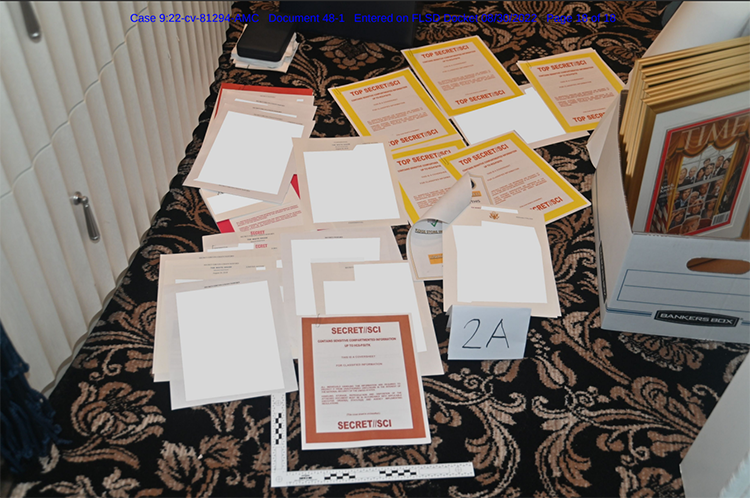
When the HR manager finally appeared, she presented Velarde with a stack of 31 documents and told her she had to complete the forms before she could start. The HR manager reportedly said, “We gotta get through [these to] get you onboard. We’ll try to get through them as fast as possible.”
One of the forms was an arbitration agreement. When Velarde refused to sign because she did not understand what it was, the HR manager told her, “If there are ever any issues, [the arbitration agreement] will allow us to resolve them.” Velarde felt pressured to fill out the forms quickly and was told that she had to sign the agreement to start working. The HR manager insisted that the agreement would help resolve any issues without having to pay lawyers. Valarde signed the agreement, as directed.
Later, after she was terminated, she filed a complaint in California state court. Her lawsuit describes disability discrimination and whistleblower protection violations, among other claims.
Monroe Operations, the parent company, moved to compel arbitration. The trial court denied the motion, finding that the agreement was unconscionable. The Court of Appeal affirmed that decision.
Shocking the conscience
Courts are very inclined to enforce contracts. After all, if people (or organizations) make promises, they should generally have to follow through or face the consequences. There are exceptions, however.
One of these allows an agreement to be voided if it is so one-sided or unfair that it “shocks the conscience” of the court. Awkwardly, “shocking the conscience” is a very subjective test – too squishy and “vibe driven” to be a useful legal standard. So, courts have struggled to build a framework that allows reasonable people, with differing shock thresholds, to reach a consensus.
Ultimately, all this slicing, dicing, defining and exampling breaks down to one thing. It’s bargaining power. Karla Valarde had, after all, been out of work for nine months.
Procedural unconscionability
When determining if a contract is unconscionable, the court will look at the procedural and substantive aspects of the contract. Procedural unconscionability focuses on the bargaining process that established the contract (imagining that there was one.) It examines whether one party was at a severe disadvantage because of factors like:
- Unequal bargaining power – If one party has considerably more bargaining power than the other;
- Lack of meaningful choice – If one party has no opportunity to negotiate the terms of the contract;
- Hidden terms and surprises – If one party includes complex or technical language in the fine print of the contract, or includes clauses that are not within the other party’s expectations;
- Misrepresentation or deception – If one party misleads the other concerning key terms of the contract, the court might see fit not to enforce it.
Substantive unconscionability
READ MORE CALIFORNIA LABOR LAW LEGAL NEWS
Examples of substantive unconscionability include:
- Excessive cost – if one party charges a price that far exceeds the market value of the goods or services offered in the contract;
- Unfair risk – does the risk fall only on one party; and
- Excessive penalties – if the contract contains provisions that include excessive penalties or limits the legal options for an injured party;
In Valarde, the Court of Appeal found that the arbitration agreement failed under both tests. Karla Valarde had no opportunity to negotiate the terms and conditions of her employment. Furthermore, she was pressured to sign quickly and in hope of a quick resolution of any possible future disputes. She also appears to have been misled about the possibility that she might ultimately have to retain an attorney to enforce her rights.
Is Valarde just a one-off?
A quick survey suggests not. In another recent California lawsuit, Silva v. Cross Country Healthcare, Inc. the underlying labor law issues are slightly different, but the unconscionability issue is the same. The facts are also similar – a healthcare business, a buried arbitration agreement and pressure to sign. Onboarding seems to be a legally fraught situation, and new hires should be cautious.

Source link