ABA Day is an opportunity for young lawyers to participate in real-life advocacy for important issues impacting lawyers and the practice of law across the country.
As the chair of the ABA Young Lawyers Division, I have had the privilege of serving on the ABA Day planning committee for the last two years. After my first ABA Day in 2025, I immediately saw the value of young lawyers participating in the event, not just in a superficial way but in the actual conversations, the advocacy and the energy of the week. I wanted our presence to be felt in meeting rooms, in policy discussions and in the relationships we were building on Capitol Hill. It mattered to me that young lawyers were not just included but engaged and leading.
After spending time in Washington, D.C., this year, I came away even more convinced that young lawyers belong in these meetings—and that their perspectives are more appreciated than ever in Congress. This event is ultimately about the ABA’s lobbying goals, but the unintended consequences that benefit young lawyers include building lasting relationships with lawmakers and their staff, learning about how the advocacy process works, and being on the front lines of the work that can impact thousands.
I have always appreciated that ABA Day asks lawyers to show up, be real and explain why the issues matter to them and those in their home state. That may not sound like much, and Capitol Hill will do its best to keep all of us humble, but it is beyond influential. ABA Day creates space for lawyers to connect policy back to actual practice, actual clients and the actual pressures facing the justice system.
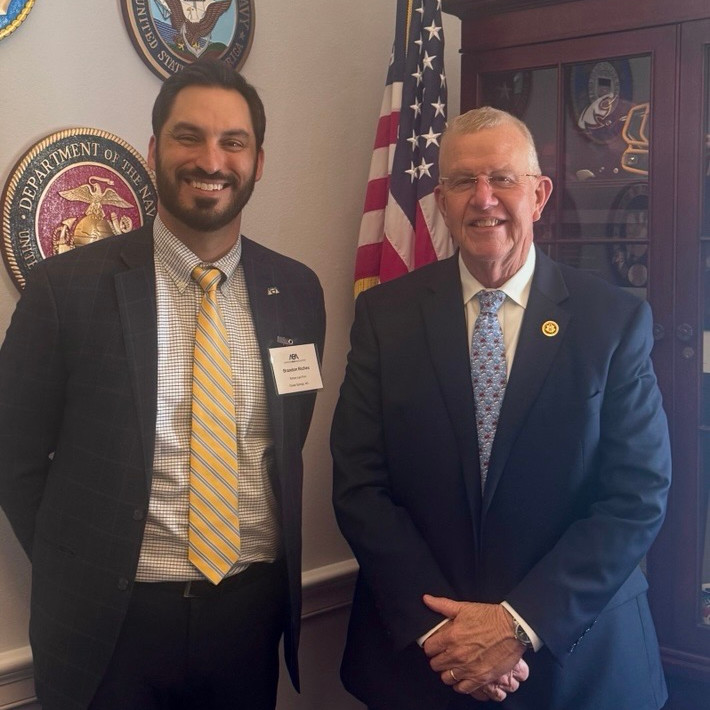
ABA Day also encourages advocacy that is meant to benefit your own home state. I have served as the state captain for Mississippi the last two years and have done most of the visits to the Mississippi congressional leaders on my own. I believe that eventually, other young (and old) lawyers from Mississippi will join the effort. Influential change does not happen overnight.
And that is part of what made this year so energizing. The conversations moved quickly. Once we started talking about legal aid funding and judicial security, the issues stopped sounding like talking points and started sounding like what they really are: real problems we see every day in our jobs. Hearing colleagues talk about clients who cannot access representation or judges facing increasing threats made it clear that these are not distant policy debates—they are immediate challenges we all face, regardless of locale. Those are the kinds of conversations that stay with you long after the meetings end.
I think that matters in a particular way for young lawyers. There can be an unspoken assumption early in this profession that advocacy at this level is for someone else—someone more senior, more established, more plugged in. ABA Day is a pretty effective antidote to that mindset. It makes clear that you do not need 20 years of seniority to have something worth saying. In many ways, younger lawyers are often among the people closest to the real-world effects of these issues. We are the ones handling the day-to-day client interactions, navigating evolving technology and seeing firsthand where the system works—and where it does not.
That is one reason I love seeing the YLD show up to ABA Day. While not every young lawyer can attend, the number we did have was an amazing testament to the passion we have for the advocacy that happens on ABA Day. I am proud of how the broader ABA Day audience treated our YLD members. Young lawyers can sometimes feel out of place or feel that ever-present imposter syndrome. ABA Day attendees, for the most part, helped young lawyers overcome this immediately. The YLD was welcomed with open arms and was able to join arms with more seasoned ABA Day attendees to achieve the event’s goals.
Another one of my favorite things about ABA Day, honestly, is the atmosphere of it. It is serious but not stiff in any way. Purposeful but not joyless. People come prepared, they care about the work and they actually want to be there. That combination is rarer than it should be. There is also something quietly encouraging about spending time around lawyers who are willing to take time out of already busy schedules to advocate not just for themselves but for the profession and the justice system as a whole.
For me, ABA Day 2026 was a reminder that the YLD has something real to add to this work. Young lawyers bring urgency, practicality and a clear-eyed understanding of where the profession is right now. We also have a real stake in where it is going. That is why I hope YLD’s involvement in ABA Day continues to grow—not as a one-time appearance but also because young lawyers should naturally be part of these conversations. Going forward, I would love to see even more intentional integration of young lawyers into advocacy teams, more opportunities for leadership in meetings, and a continued emphasis on making ABA Day a place where new voices are encouraged and expected.
If I had to boil my ABA Day takeaway down to one thing, it would be this: Advocacy should not feel distant to young lawyers. It should feel like we are a needed voice—and part of being in a profession that still has the power to shape institutions and serve the public good.
ABA Day made that feel clear to me this year. I hope more young lawyers get the chance to experience that for themselves. And if they do, I think they will walk away with the same realization I did: This is exactly where we are supposed to be.
Brandon Riches established the Riches Law Firm in 2023, where he focuses on most areas of immigration law. He currently is the chair of the ABA Young Lawyers Division.
This report is written by the ABA Governmental Affairs Office and discusses advocacy efforts by the ABA relating to issues being addressed by Congress and the executive branch of the U.S. government. Follow @ABAGrassroots on social media.
This column reflects the opinions of the author and not necessarily the views of the ABA Journal—or the American Bar Association.